.svg)
.svg)
Our innovation
A closer look at the intelligence behind Lanternn
%20(1).webp)
(Challenge)
Road networks generate vast volumes of fragmented data across CCTV, traffic sensors, and third-party sources.
(Approach)
Converting this information into reliable intelligence and real-time situational awareness requires structured validation, contextual enrichment, and integrated operational workflows
(Solution)
Lanternn is built as a modular roadway intelligence platform combining multi-layered data fusion, Computer Vision, anomaly detection, and cloud-native infrastructure.
Incident validation & fusion engine
Our Fusion Engine performs multi-layered data fusion to correlate related detections across sources and deduplicate like-for-like events, establishing ground truth.
Events are enriched with GIS and contextual data, scored for severity and confidence to derive a relevance score, and published only when thresholds are met, enabling incident priority ranking and real-time alerts.
(Technical characteristics)
1.1
Multi-layered data fusion
1.2
GIS-anchored event modeling
1.3
Cross-source correlation
1.4
Severity, confidence, and relevance scoring
1.5
Incident priority ranking
1.6
Operator-defined publication thresholds
1.7
Real-time alert publishing
Operator interface
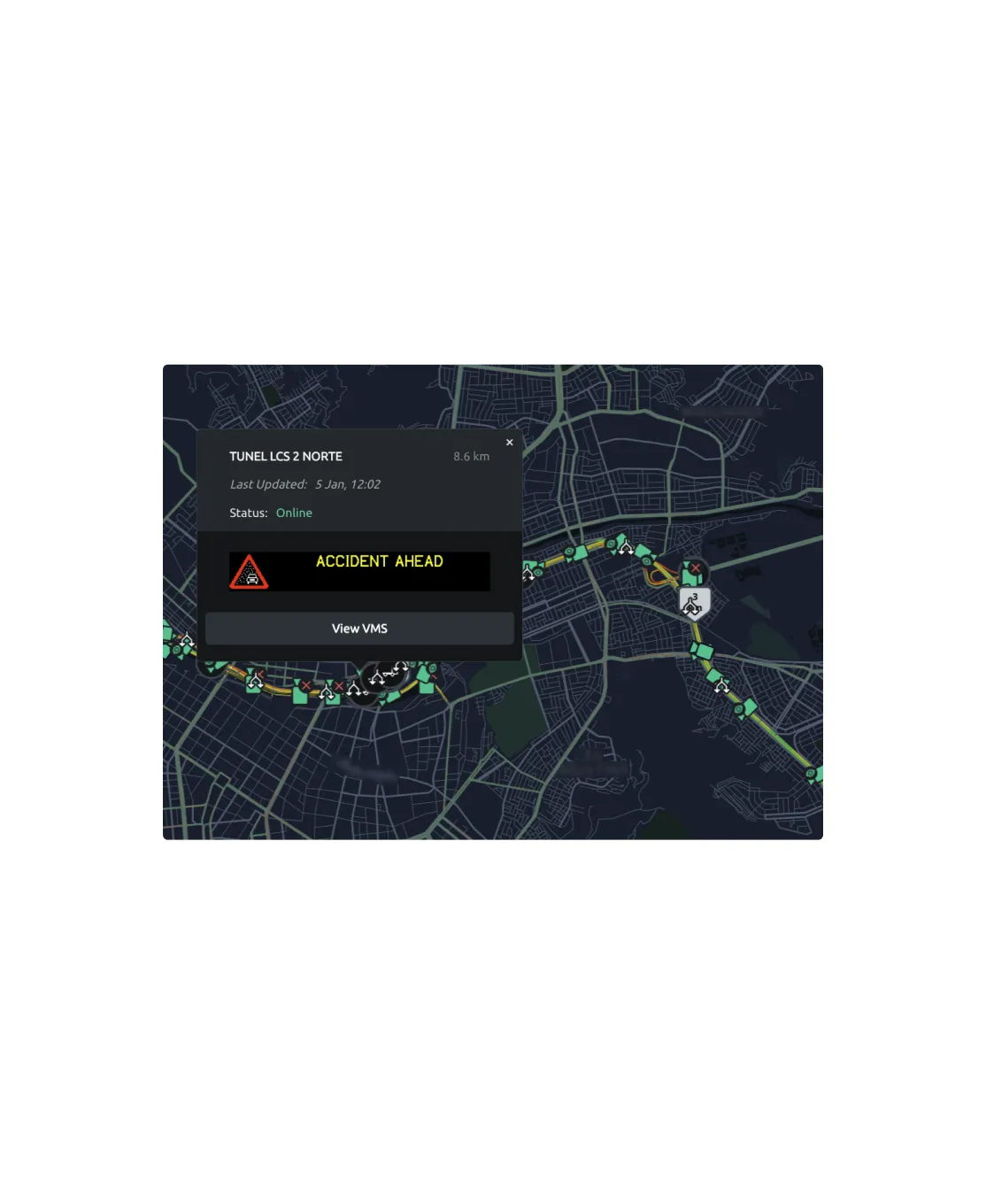
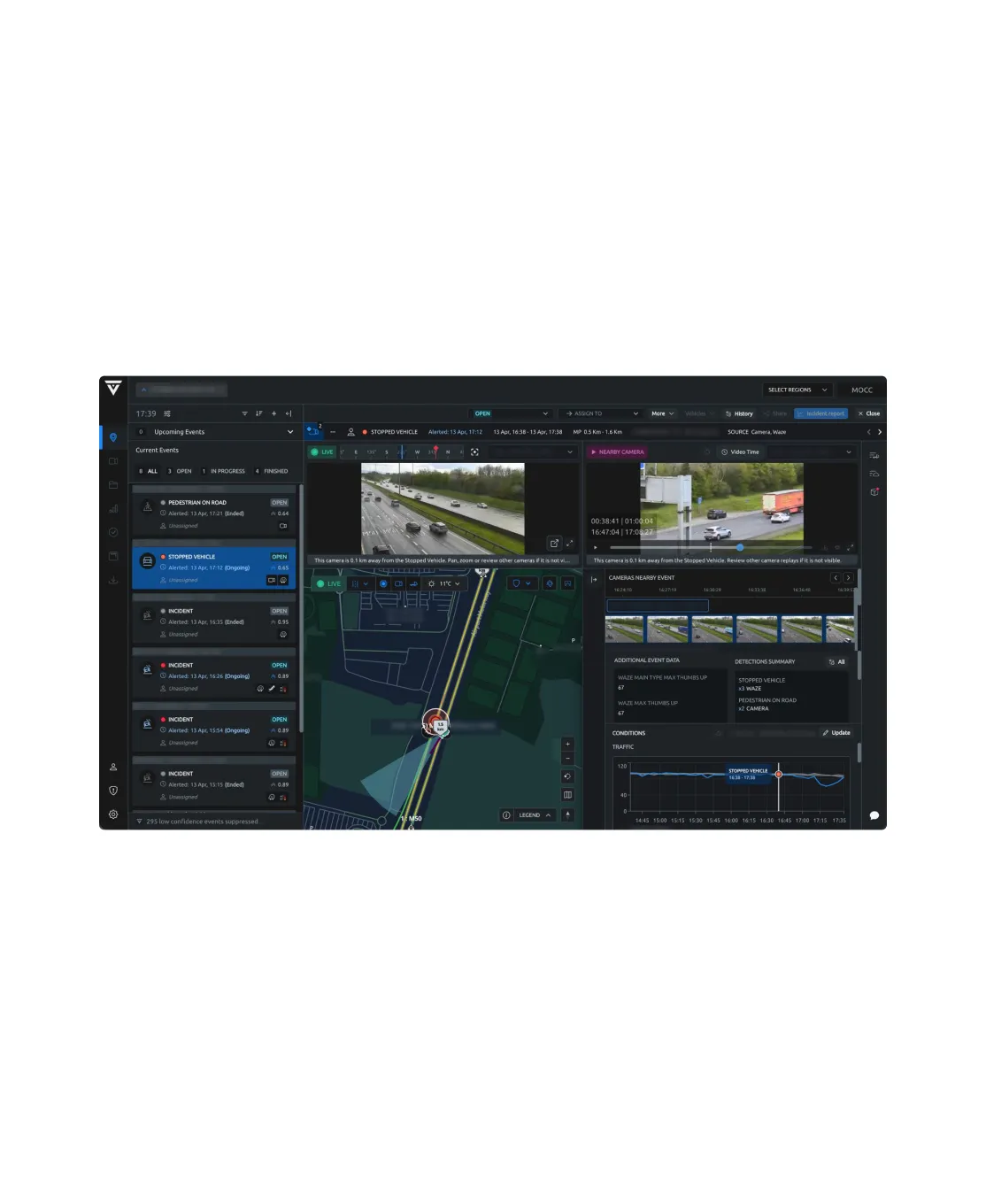
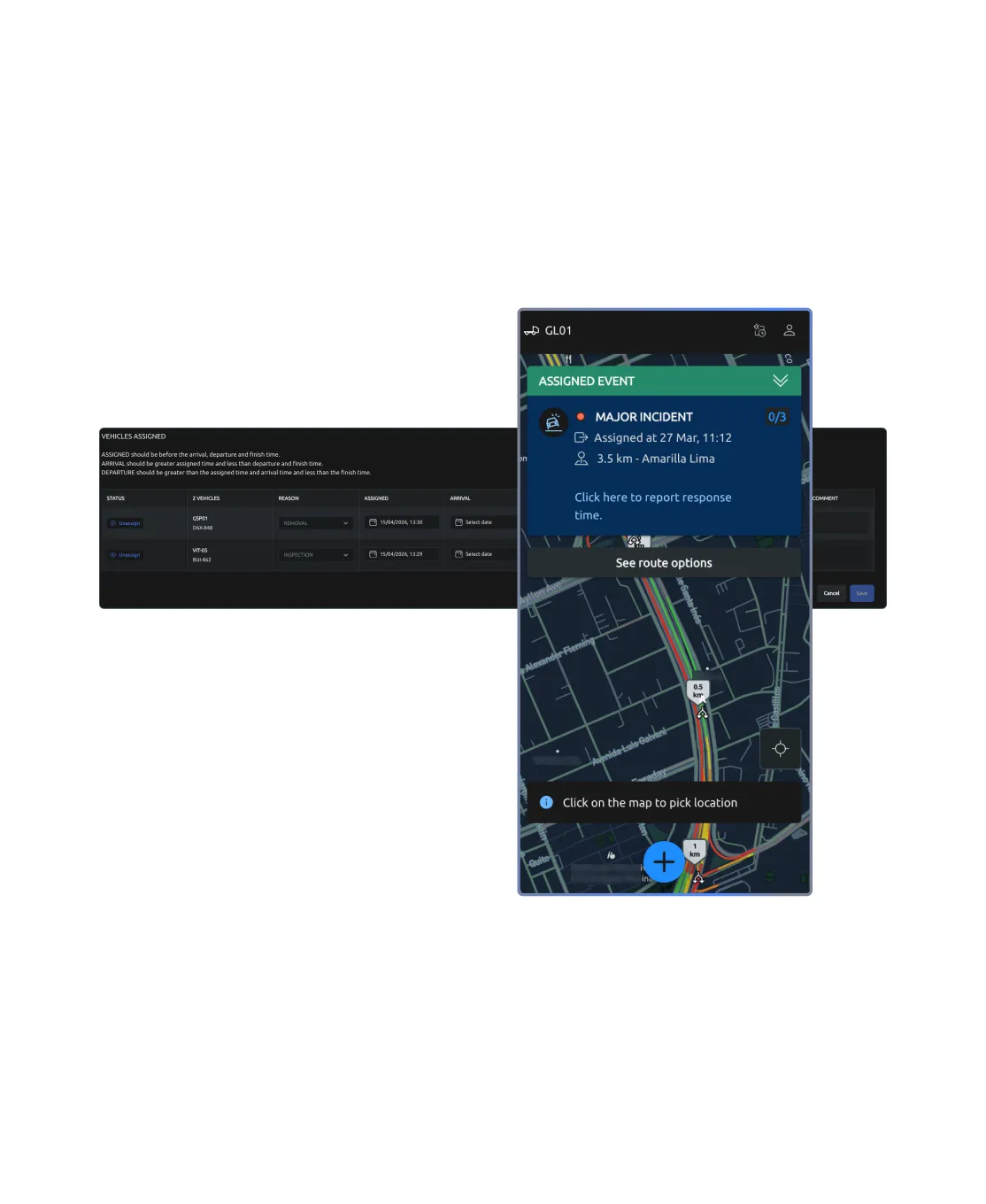
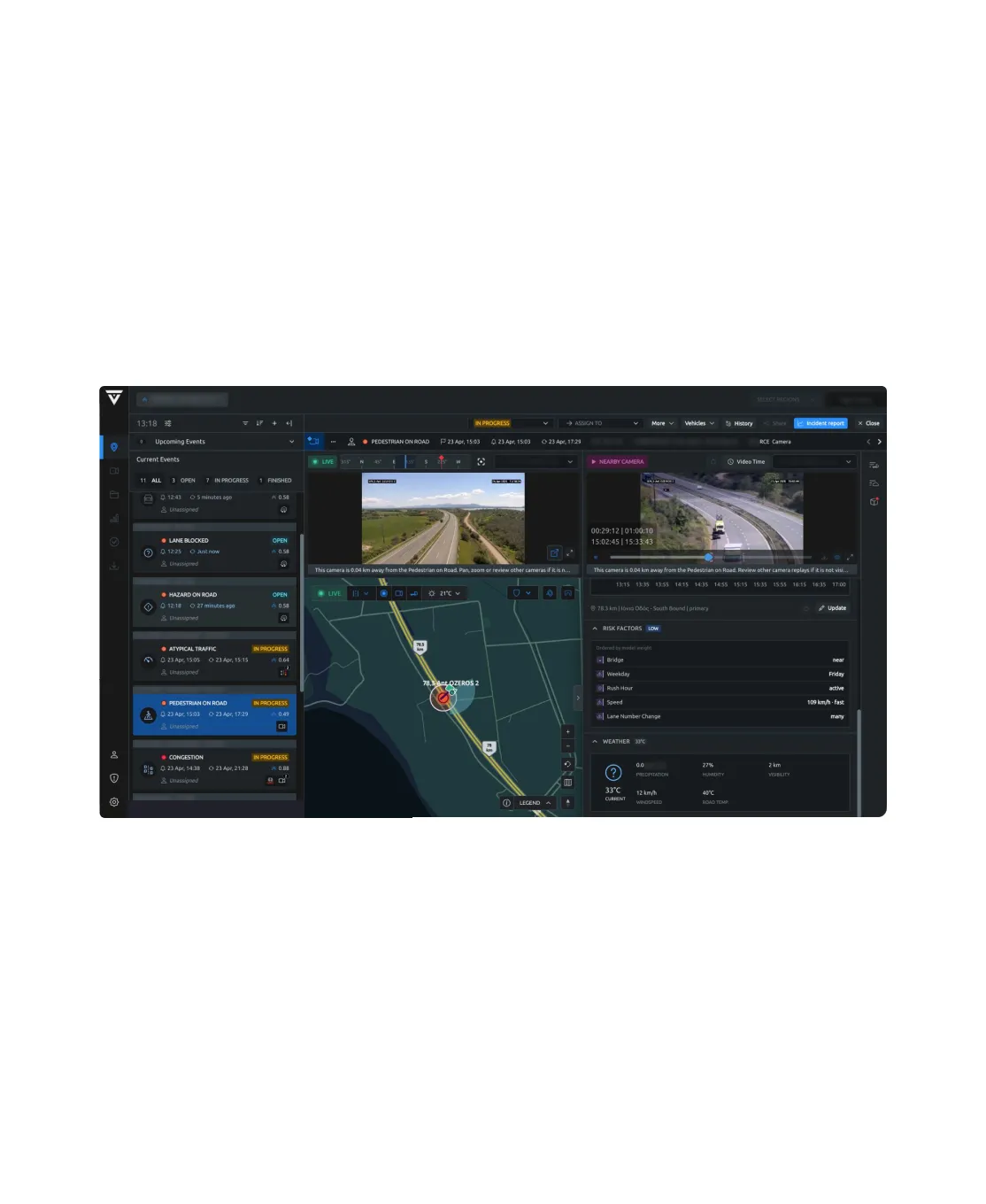
Lanternn brings key context into a single operational view: event summary, nearest live and recorded video, traffic impact, and nearby patrol assets. Built-in workflows support validation, response, logging, and clearance — improving situational awareness and delivering actionable intelligence.
(Technical characteristics)
2.1
Single-screen incident workspace
2.2
Automatic nearest-camera identification
2.3
Live and historical video replay
2.4
Real-time traffic condition and impact monitoring
2.5
Patrol proximity visualization and resource coordination
2.6
Operator-defined publication thresholds
2.7
Integrated incident logging and lifecycle management
Detection & computer vision
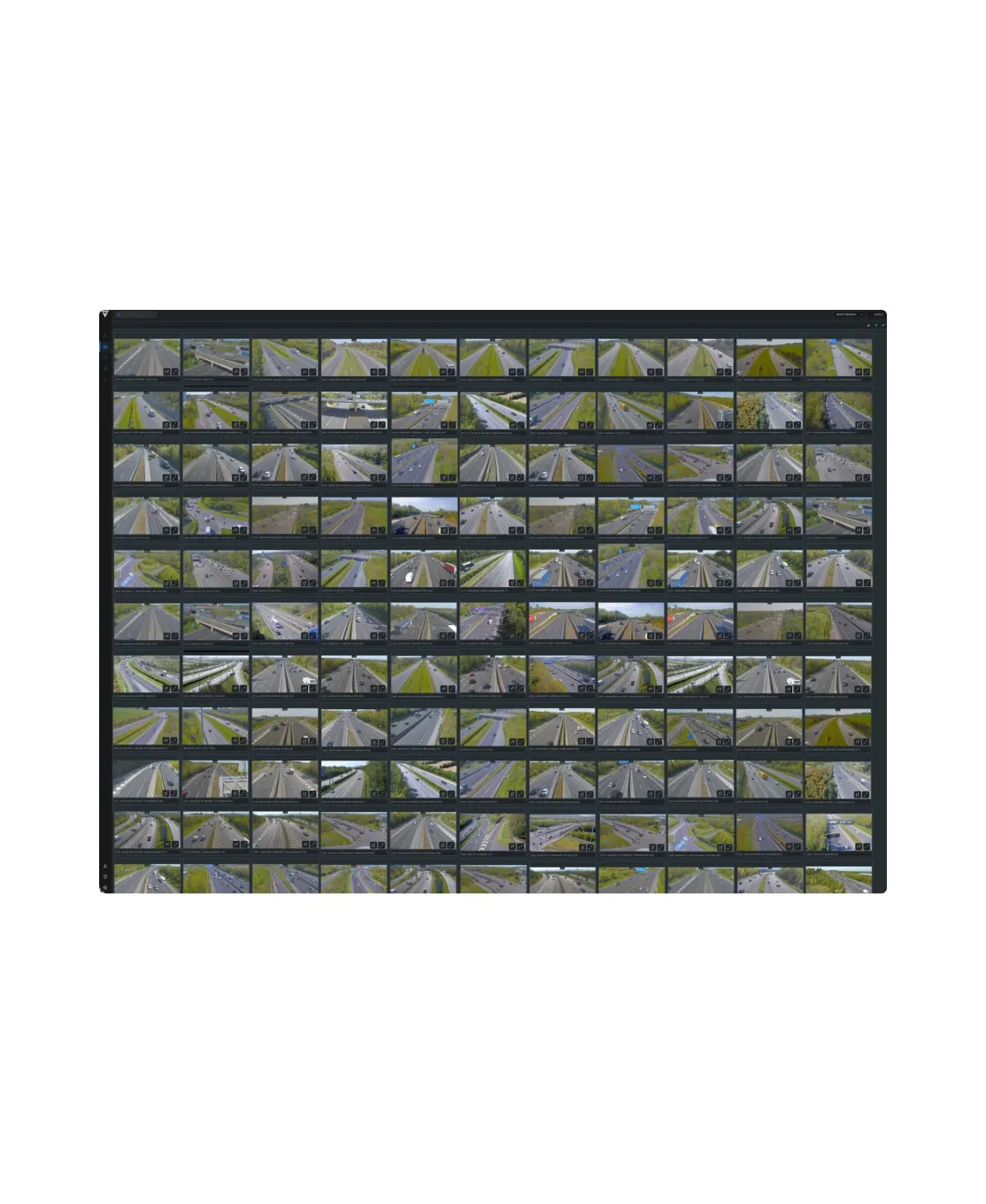
Lanternn applies cloud-based, hardware-agnostic Computer Vision to existing IP cameras, converting standard CCTV into AI-enabled detection infrastructure without replacing roadside assets.
Detections are geo-located to the digital road model, enriched with contextual data, and validated before publication to operators.
(Technical characteristics)
3.1
Cloud-based Computer Vision processing
3.2
Hardware-agnostic IP camera integration
3.3
Stopped vehicle detection
3.4
Pedestrian detection
3.5
Hazard light detection
3.6
Lane-level geo-location via dynamic masking
3.7
Automatic PTZ recalibration
3.8
Cross-camera detection aggregation
Anomalous traffic detection & noise reduction
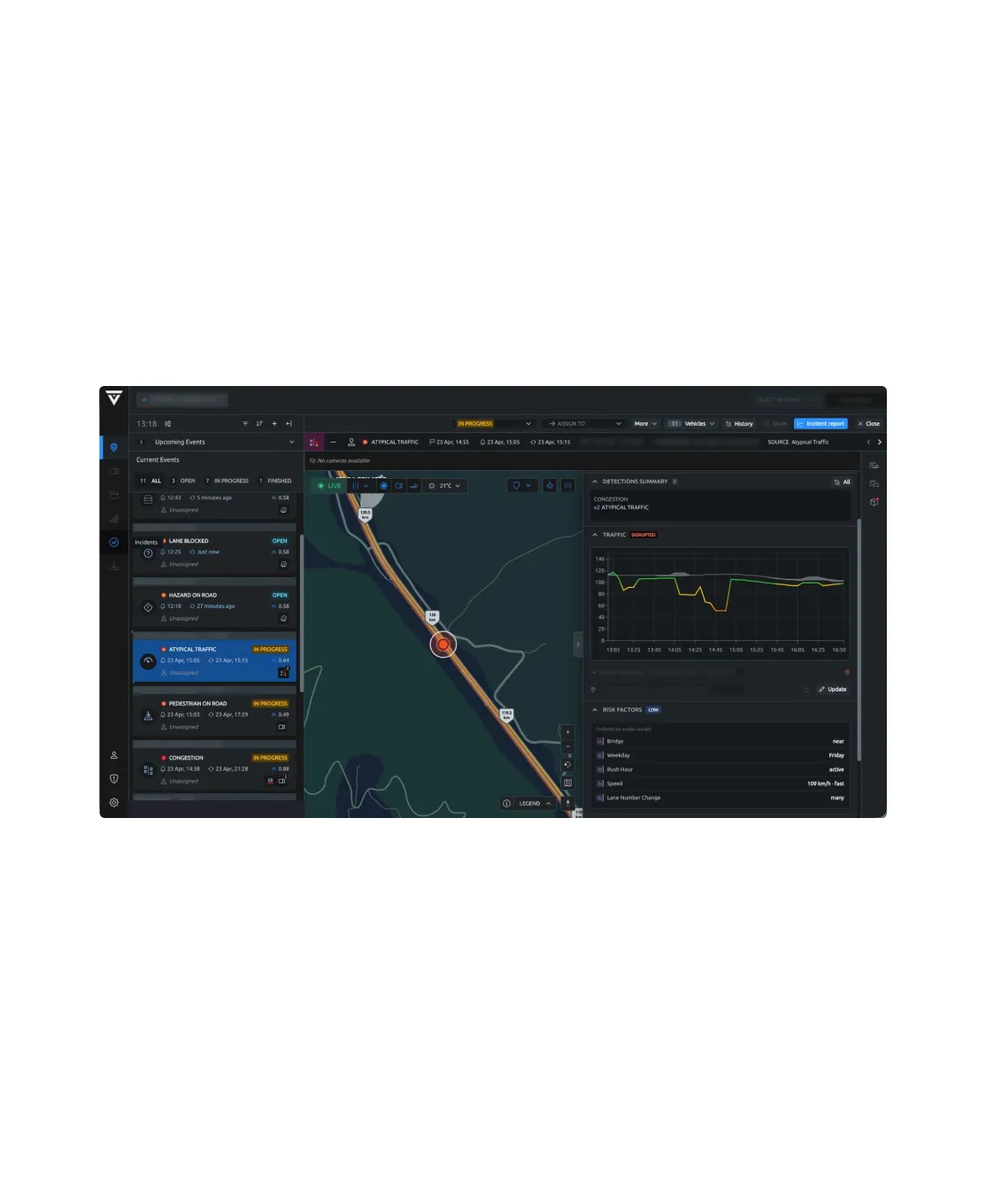
Fixed speed thresholds generate alerts during routine peak congestion, reducing signal quality and increasing alert fatigue.
Fixed speed thresholds generate alerts during routine peak congestion, reducing signal quality and increasing alert fatigue.We model behavior by corridor and time period, identifying deviations from expected traffic patterns rather than relying on static thresholds. Routine congestion is filtered, and non-recurring congestion is surfaced.
(Technical characteristics)
4.1
Corridor- and segment-level traffic pattern analysis
4.2
Real-time deviation detection
4.3
Integrated with Fusion Engine for cross-source validation
Modular deployment
Agencies rarely replace existing ATMS platforms outright. Incremental integration is often required. Lanternn is modular and deployable in phases. Detection, fusion, workflow, and analytics capabilities can operate independently or as a unified platform.
Validated alerts can be integrated into third-party systems via secure APIs.
(Technical characteristics)
5.1
Fusion-only integration with existing systems
5.2
Incident management and ATMS workflow tools (patrol dispatch, incident forms, shift management)
5.3
Analytics and reporting modules
5.4
Secure event integration API
5.5
Compatible with existing ATMS environments
Cloud-native infrastructure & deployment
On-premise traffic systems are difficult to update and slow to evolve. Lanternn is delivered as a cloud-native SaaS platform built for critical infrastructure environments.
The architecture enables controlled releases and rapid configuration updates without hardware replacement.
(Technical characteristics)
6.1
SaaS delivery model
6.2
Cloud-based Computer Vision and fusion processing
6.3
Dedicated or client-hosted cloud deployment options
6.4
Regular controlled releases
6.5
Rapid rule and configuration updates
6.6
No storage of personally identifiable imagery
6.7
GDPR-aligned data handling
Outsourcing expertise
Detection rules, fusion thresholds, and reporting requirements evolve as road networks change. Lanternn includes ongoing configuration support. Event validation and reporting formats can be refined over time in collaboration with operators.
(Technical characteristics)
7.1
Configurable fusion rules
7.2
Computer Vision and fusion parameter calibration
7.3
Ongoing data source and integration updates
7.4
Custom reporting configuration
Risk profile for strategy
Validated incidents generate structured operational data. Without consolidation and enrichment, this data remains underutilized. Lanternn stores validated events and enriches them with contextual indicators derived from traffic behavior, weather conditions, and historical crash patterns.
(Technical characteristics)
8.1
Event-level risk scoring
8.2
Historical incident warehousing
8.3
Corridor trend and pattern analysis
8.4
Time-of-day and condition-based modeling
8.5
GIS-based road segmentation
8.6
Reporting dashboards and data export capabilities


See how Lanternn empowers safer, faster, more efficient road operations.



%201.png)